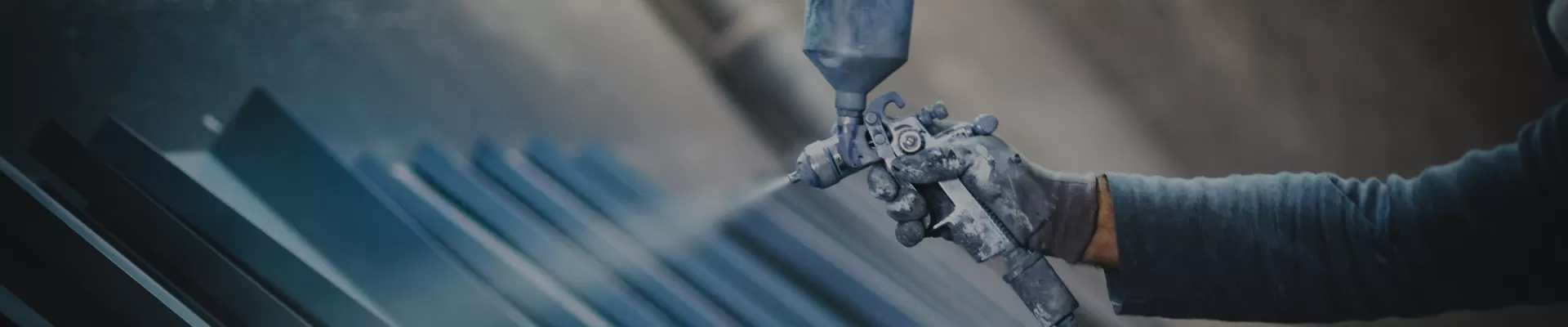
YD supplies durable powder coating for elevator parts, including elevator doors, landing door panels, cabin frames, jambs, brackets and other fabricated metal components.
Developed for elevator manufacturers and component factories with manual or automatic electrostatic spraying lines, our elevator powder coating provides good leveling, strong adhesion, mechanical resistance and corrosion protection on properly pretreated metal surfaces.
Colors, gloss levels, textures and coating formulations can be customized to match your elevator design, operating environment, approved sample and existing curing line.
Send us your elevator component, metal substrate, required color, finish, curing conditions and estimated powder consumption. YD will recommend a suitable formulation and prepare a sample for production-line testing.
Powder Coating Powder for Elevator Manufacturers
Elevator manufacturers require a coating that performs consistently across large visible panels, folded door edges, welded frames and smaller fabricated components.
YD powder coating for elevator parts can be evaluated for:
Elevator landing doors
Elevator car door panels
Elevator door frames
Elevator door jambs
Header panels and transoms
Elevator cabin frames
Painted elevator wall panels
Elevator ceiling metal panels
Elevator control cabinet housings
Elevator machine covers
Inspection box housings
Metal brackets and mounting parts
Fabricated support frames
Escalator metal covers
Other painted elevator components
This page refers to the supply of powder coating powder for elevator production lines. YD does not manufacture elevator parts or provide local powder coating services.


Why Elevator Parts Need a Stable Powder Coating
Elevator components are highly visible and are frequently handled during fabrication, assembly, installation and maintenance.
A suitable powder coating for elevator doors and panels should help manufacturers achieve:
Consistent color across matching components
Uniform gloss and texture
Smooth coverage on large metal panels
Reliable adhesion after proper pretreatment
Resistance to normal handling and assembly
Protection against moisture and corrosion
Repeatable results across production batches
Compatibility with existing spraying and curing lines
The powder coating should be selected according to the component, substrate, installation environment and required appearance—not only according to the color number.
Consistent Appearance Across Elevator Door Assemblies
An elevator entrance may include a landing door, frame, jamb, header and surrounding metal panels.
Even small differences in color, gloss or texture can become noticeable when these components are installed next to each other.
YD can match elevator powder coating according to:
For project orders and repeat production, we recommend approving a physical panel that defines the required color, gloss and texture.
The approved panel can then be retained as the production reference for later batches and replacement components.
Smooth Leveling for Large Elevator Panels
Large elevator door panels make coating defects easier to see.
Poor flow, uneven film thickness or inconsistent curing may create visible differences across the panel surface.
YD powder coating for elevator panels offers good leveling under suitable application and curing conditions. It can be used to produce smooth or textured finishes according to the elevator design.
For large visible panels, manufacturers should control:
Substrate flatness
Grinding and weld treatment
Surface cleanliness
Pretreatment uniformity
Powder film thickness
Spray gun distance
Oven temperature uniformity
Effective metal curing time
A smooth powder coating cannot conceal major dents, deep grinding marks, uneven welds or other substrate defects. The fabricated surface should be properly prepared before spraying.
Mechanical Protection During Assembly and Installation
Elevator parts may pass through several handling stages before final installation:
Sheet metal cutting and forming
Welding and grinding
Surface pretreatment
Powder spraying
Oven curing
Component assembly
Packaging and transportation
On-site installation
Under the stated laboratory conditions, the coating provides:
Grade 0 adhesion
Impact resistance of 50 kg·cm
Pencil hardness of at least 1H
Flexibility without cracking or peeling around a 2 mm axis
Resistance to routine ethanol wiping
These properties help the coating withstand normal handling during elevator component production and assembly.
Actual resistance depends on the substrate, pretreatment, film thickness, curing condition and type of mechanical contact.
Corrosion Protection for Elevator Metal Components
Elevator parts may be exposed to humidity, cleaning, storage conditions and moisture within the building or elevator shaft.
The standard general industrial powder coating achieved at least 240 hours of neutral salt spray resistance under the reported laboratory conditions.
The complete corrosion protection system depends on:
Steel or aluminum substrate
Edge and weld condition
Degreasing and rust removal
Pretreatment process
Powder coating formulation
Applied film thickness
Curing schedule
Indoor or outdoor exposure
Humidity and chemical environment
For coastal buildings, outdoor elevator entrances, industrial sites or high-humidity environments, provide the required salt spray target and installation conditions before selecting the formulation.
Indoor and Outdoor Elevator Powder Coating
Different elevator components may require different powder coating systems.
| Elevator Application | Suggested Evaluation Direction | Main Considerations |
|---|
| Indoor landing doors | Epoxy-polyester powder coating | Appearance, adhesion and mechanical performance |
| Elevator door frames and jambs | Epoxy-polyester powder coating | Color matching, edge coverage and handling resistance |
| Cabin frames and painted panels | Epoxy-polyester powder coating | Surface uniformity and repeated batch consistency |
| Machine covers and support parts | Epoxy-polyester or polyester | Environment, moisture and required corrosion resistance |
| Outdoor elevator entrances | Pure polyester powder coating | Weather resistance and color retention |
| Exterior lift components | Pure polyester or customized system | UV exposure, rain and corrosion requirements |
| Coastal or industrial environments | Customized coating system | Pretreatment and required salt spray performance |
Epoxy-polyester powder coating is generally evaluated for indoor elevator components.
Pure polyester powder coating should be considered for exterior elevator parts exposed to sunlight and weather.
The final selection should be confirmed through sample testing and the customer’s project requirements.
Custom Colors and Surface Finishes
YD provides custom powder coating for elevator parts according to the visual identity and design requirements of each elevator series.
Available finish directions include:
Common color directions include:
The exact color and effect should be confirmed using a physical coated sample rather than a monitor image.
Smooth or Textured Elevator Powder Coating?
The correct surface depends on the elevator design and fabrication quality.
| Finish | Suitable Components | Main Advantage |
|---|
| Smooth | Elevator doors and visible panels | Clean, uniform appearance |
| Fine texture | Door frames, jambs and cabin frames | Helps reduce the visibility of minor surface marks |
| Matte | Modern elevator interiors and structural parts | Low-reflection appearance |
| Semi-gloss | General elevator components | Balanced appearance and cleaning convenience |
| High gloss | Decorative painted panels | Brighter visual effect |
| Metallic | Selected decorative components | Creates a more distinctive appearance |
| Wrinkle or coarse texture | Machine covers and less-visible parts | Strong texture and surface concealment |
A texture can reduce the visibility of minor fabrication marks, but it should not replace proper welding, grinding and surface preparation.
Suitable Metal Substrates
YD elevator powder coating can be evaluated for different conductive metal substrates.
Cold-Rolled Steel
Commonly used for elevator doors, frames, panels, machine covers and fabricated components.
The laboratory performance data was obtained from 0.8 mm cold-rolled steel panels after oil and rust removal.
Mild Steel
Suitable for welded frames, supports, brackets and structural elevator components.
Weld residue, oxidation, scale and oil should be removed before pretreatment.
Galvanized Steel
Galvanized sheet may be used for selected elevator panels and components.
Surface condition, pretreatment and possible outgassing should be evaluated through sample spraying.
Aluminum
Powder coating can be evaluated for properly pretreated aluminum panels and lightweight components.
The aluminum alloy, pretreatment and curing conditions should be provided before sample preparation.
Stainless Steel
Powder coating may be considered when a painted stainless steel surface is required.
Adhesion should be tested on the actual material and pretreatment system. Decorative stainless steel panels intended to retain their original brushed or polished appearance are not normally included in this application.
Recommended Application Parameters
| Item | Recommended Parameter |
|---|
| Application method | High-voltage electrostatic spraying |
| Recommended spraying voltage | 60–80 kV |
| Recommended film thickness | 60–150 μm |
| Recommended curing temperature | 180–200°C |
| Recommended curing time | 10–15 minutes |
| Laboratory test substrate | 0.8 mm cold-rolled steel plate |
| Laboratory test film thickness | 40–80 μm |
| Test panel preparation | Oil and rust removal |
These parameters provide an initial application reference.
Final spraying and curing conditions should be adjusted according to:
Elevator part size
Sheet metal thickness
Component geometry
Hanging orientation
Spray gun configuration
Conveyor speed
Powder recovery system
Oven temperature distribution
Required color and texture
Target coating performance
The curing time should be evaluated according to the actual metal temperature rather than oven air temperature alone.
Coating Performance
| Test Item | Reported Result | Testing Standard |
|---|
| Adhesion | Grade 0 | GB/T 9286 |
| Impact resistance | 50 kg·cm passed | GB/T 1732 |
| Pencil hardness | ≥1H | GB/T 6739 |
| Solvent resistance | No visible damage or discoloration after 20 ethanol wipes | — |
| Alkali resistance | ≥48 hours without blistering, peeling, rust or spots | GB/T 9274 |
| Water resistance | ≥240 hours without blistering, peeling, rust or spots | GB/T 1733 |
| Acid resistance | ≥48 hours without blistering, peeling, rust or spots | GB/T 9274 |
| Neutral salt spray resistance | ≥240 hours; rust blistering below 2 mm | GB/T 1771 |
| Flexibility | No cracking or peeling around a 2 mm axis | GB/T 173 |
| Artificial aging resistance | ≥480 hours under the reported test criteria | GB/T 1865 Method 1 |
These results were obtained under laboratory conditions and are provided for reference.
Actual coating performance may change with the substrate, pretreatment, coating thickness, color, gloss, curing conditions and service environment.
RoHS-Compliant Powder Coating
According to the existing product specification, the powder coating does not contain arsenic, selenium, lead, hexavalent chromium, mercury, antimony, cadmium or other listed heavy metals.
This supports elevator component manufacturers that require RoHS-compliant powder coating for exported products and controlled supply chains.
Contact YD when a project requires specific declarations, test reports or batch documents.
Important Masking Areas on Elevator Parts
Powder coating should not be applied indiscriminately to every area of an elevator component.
Depending on the part design, manufacturers may need to mask:
Threaded holes
Grounding points
Electrical contact areas
Sliding contact surfaces
Bearing or shaft-fitting areas
Precision assembly surfaces
Identification plates
Components with dimensional tolerances
Excess coating thickness on fitting, sliding or threaded areas may affect assembly.
Provide drawings or masking requirements when the elevator part includes critical clearances or electrical grounding points.
Adapting the Powder to Your Production Line
Elevator component factories may use different spraying booths, guns, reciprocators, conveyor speeds, recovery systems and curing ovens.
Before recommending a powder coating for elevator parts, YD can review:
Manual or automatic spray line
Spray gun brand
Typical operating voltage
Powder feed settings
Powder recovery method
Number of recovery cycles
Component dimensions
Hanging density
Target film thickness
Conveyor speed
Oven temperature
Effective curing time
Existing coating defects
This information helps determine whether the powder is suitable for the actual production process.
Common Elevator Powder Coating Problems
Color Differences Between Door and Frame Components
Color differences may be caused by different coating batches, film thicknesses, substrates, curing temperatures or gloss levels.
Door panels, frames and jambs should be approved using the same physical color reference.
Uneven Finish on Large Door Panels
Large flat surfaces can make flow and film-thickness differences more visible.
Review the powder flow, gun movement, grounding, film thickness and oven uniformity.
Thin Coverage Around Corners and Recesses
Folded door edges, channels and recessed structures may experience electrostatic shielding.
Gun voltage, distance, part orientation and powder flow may need to be adjusted during line testing.
Pinholes or Bubbles
Pinholes may be related to contamination, porous welds, trapped gas, galvanized material or incomplete surface cleaning.
The substrate and pretreatment should be checked before changing the powder formulation.
Poor Adhesion Around Welded Areas
Weld residue, scale, polishing dust, oil and inconsistent pretreatment can reduce coating adhesion.
Welded parts require proper grinding, cleaning and pretreatment before powder spraying.
Coating Damage During Assembly
Damage may result from insufficient curing, unsuitable film thickness, sharp contact, rough handling or an incompatible coating system.
The powder, curing process and assembly method should be evaluated together.
Sample Approval Before Bulk Production
Testing on the customer’s production line helps reduce the risk of color, appearance and application problems.
The recommended process is:
Provide the elevator component and application environment.
Confirm the metal substrate.
Send the required RAL, Pantone or physical color sample.
Confirm the required gloss and texture.
Provide the pretreatment method.
Share the spraying and curing conditions.
Test the sample on an actual elevator component.
Inspect color, appearance, adhesion and assembly compatibility.
Approve and retain a physical master panel.
Use the approved panel for repeat batch comparison.
This process is particularly important when the same color will be used across landing doors, frames, jambs and replacement components.
Why Choose YD for Elevator Powder Coating?
Customized for the Elevator Application
YD can recommend or adjust the formulation according to the component, substrate, environment, color, texture and required performance.
Support for Project Color Matching
Colors can be developed from RAL references, Pantone numbers, coated elevator panels or physical samples.
Stable Supply for Repeat Orders
YD supports elevator manufacturers and component factories that purchase standard or customized powder coating on a regular basis.
Production-Line Application Support
Application recommendations can be adjusted according to spraying equipment, component geometry, recovery conditions and curing performance.
Sample-First Evaluation
Samples can be prepared for line testing before bulk production, helping manufacturers verify appearance and application compatibility.
Learn more about our custom powder coating service.
For other industrial metal applications, view our general industrial powder coating.
For exterior components, explore our pure polyester powder coating.
View our powder coating factory and production capabilities.
Information Required for a Quotation
For a more accurate sample recommendation and bulk quotation, please provide:
Elevator component type
Indoor or outdoor installation
Metal substrate
Pretreatment method
RAL, Pantone or physical color sample
Required gloss level
Smooth or textured finish
Target film thickness
Spraying equipment
Curing temperature and time
Required salt spray performance
Estimated order quantity
Monthly or annual consumption
Packaging requirement
Destination country or port
Complete application information helps us recommend a more suitable elevator powder coating and reduce repeated sample adjustments.
Frequently Asked Questions
Does YD manufacture elevator parts?
No. YD manufactures and supplies powder coating powder for elevator manufacturers and component factories with their own spraying lines or coating partners.
What parts of an elevator can be powder coated?
Powder coating can be evaluated for elevator doors, door frames, jambs, cabin frames, painted panels, machine covers, brackets and other conductive metal components.
The substrate, component function and masking requirements should be confirmed before application.
What powder coating is suitable for indoor elevator doors?
Epoxy-polyester powder coating can generally be evaluated for indoor elevator doors, frames and other painted components where appearance, adhesion and mechanical properties are important.
What coating should be used for outdoor elevator components?
Pure polyester powder coating should be considered for components exposed to sunlight, rain and outdoor weather.
Required UV and corrosion performance should be confirmed before formulation selection.
Can YD match an existing elevator door color?
Yes. Send a RAL number, Pantone number, existing coated panel or physical elevator component.
A coated physical sample should be approved before bulk production.
Can you make textured powder coating for elevator doors?
Yes. Smooth, fine-textured, sand-textured, matte and other finishes can be evaluated according to the required appearance.
Can the powder be used on galvanized elevator panels?
It may be used after evaluating the galvanized surface, pretreatment and outgassing risk.
Sample spraying on the actual substrate is recommended.
Can it be used with automatic spraying equipment?
The powder is suitable for high-voltage electrostatic spraying. Final compatibility should be verified using the customer’s automatic spraying equipment, recovery system and curing oven.
What film thickness is recommended?
The general recommended film thickness is 60–150 μm.
Critical fitting, sliding, threaded and grounding areas may require masking or controlled film thickness.
Is this coating suitable for elevator guide rails or moving contact surfaces?
The coating is mainly intended for protective and decorative elevator panels, frames, housings and fabricated components.
Guide surfaces, precision mechanical interfaces and moving contact areas should be evaluated separately and may need to remain uncoated.
Can we test a sample before placing a bulk order?
Yes. Provide the substrate, color, finish, curing conditions, environment and required performance so that a suitable sample can be prepared.
Request an Elevator Powder Coating Sample
Looking for stable powder coating for elevator parts, landing doors, elevator panels, frames or fabricated components?
Send YD your:
YD will recommend a suitable elevator powder coating, prepare a sample for production-line evaluation and provide a quotation for repeat bulk supply.
Contact YD Powder Coating to discuss your elevator component requirements.